Hardware Evolution • Version 2.0

Redefining Metal Detection

Bypassing consumer-grade filters to analyze raw electromagnetic decay with Edge Machine Learning and a community-driven mobile interface.

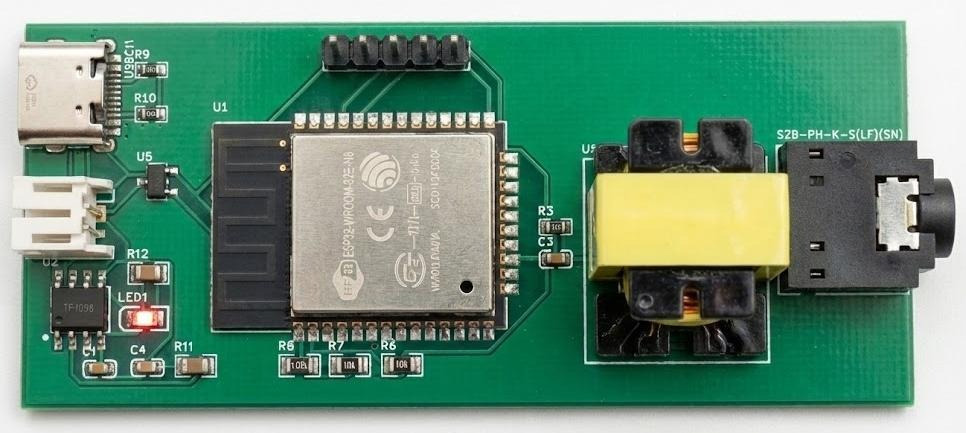
Deep Sight V1 Prototype

Prototype 1: Audio Interpretation

Our first iteration tapped into the 3.5mm audio port of existing detectors. We used a custom mobile interface to "listen" to the multi-tonal responses. Remarkably, the AI successfully distinguished between gold, silver, and aluminum—and could even differentiate a modern day quarter from a rusted bottlecap, a notoriously difficult challenge for standard systems.

The Bottleneck

While successful, we hit a ceiling. The detector's internal computer was heavily filtering and smoothing the signal before it reached the audio port, stripping away the raw spectral data needed for perfect AI discrimination.
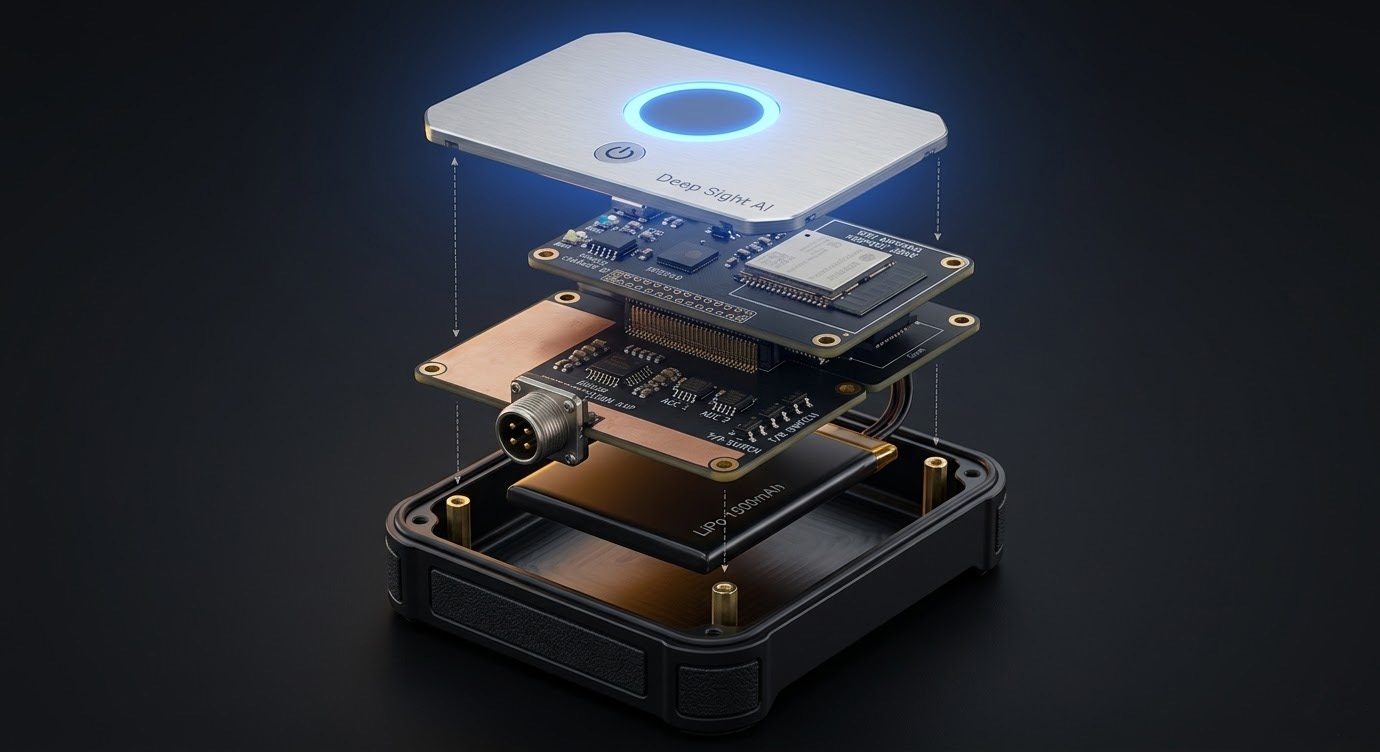
Deep Sight V2 PCB Exploded View

Version 2: Direct-to-Coil Architecture

We completely pivoted to a "Brain Bypass" strategy. Deep Sight AI replaces the metal detector's current computer entirely, connecting directly to the search coil's pins to process the raw, unfiltered analog signal.

Universal Modularity

Users can unbolt the old "brain" from any standard detector pole and attach the Deep Sight module directly to the coil, instantly upgrading the hardware to Edge AI.

Mobile UI & Evolving AI

We replaced the dated LCD screen with a custom mobile app. As users dig, they can upload their findings to the community database. This trains the AI on local ground conditions, meaning the detector is constantly learning and improving via Over-The-Air updates.
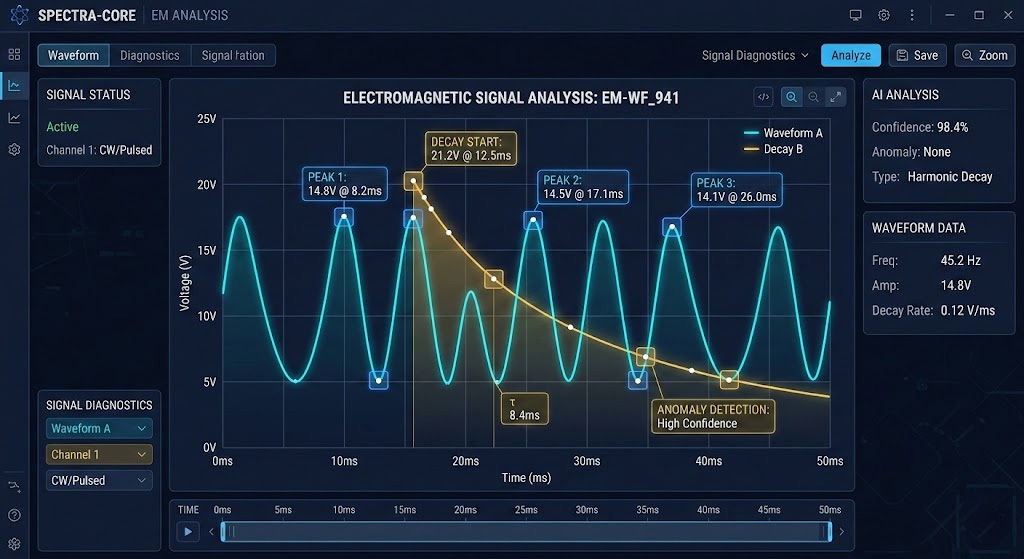
The Technical Edge: Raw Signal Analysis

By capturing the raw induction signal directly from the copper, we can finally analyze the Phase Displacement ($\phi$) and the full Magnetic Decay Curve before any factory smoothing occurs.

$$V(t) = A \cdot \sin(\omega t + \phi)$$

Our integrated ESP32-S3 analyzes the shift in $\phi$ and the amplitude $A$ in milliseconds. Combined with our community-trained Machine Learning model, this offers a level of Target ID precision that consumer-grade hardware simply cannot achieve.

Waveform Analysis [ Generate Waveform Image Here ]
Under The Hood

V2 Hardware Architecture

A professionally engineered dual-board stack built to production standards — from physical moat ground isolation to precision voltage references and hardware-timed T/R switching.

Analog Front-End Board

70 × 50mm · 4-layer
Instrumentation amp INA333 · gain ×101
ADC ADS8363 · 16-bit · 2MSPS
Precision reference REF3033 · 3.3V · 0.2%
T/R switch J175 JFET · PIN + BAT54
TX driver UCC27211 + SI2302 H-bridge
Ground isolation Physical moat · star ground
Coil connector 4-pin military circular

Digital & Power Board

70 × 50mm · 4-layer
Primary MCU ESP32-S3 · WiFi · BLE · ML
Timing coprocessor RP2040 · PIO · nanosecond
TX voltage TPS61088 · 5–24V boost
Power rails Dual isolated 3.3V LDOs
Battery LiPo 1500mAh · PMOS load share
Charging TP4056H · 500mA · NTC guard
Programming USB-C native · SWD header
Dual-board stacked architecture The analog and digital boards are physically separated and connected via a 40-pin fine-pitch Samtec board-to-board connector with strict pin grouping — 24V TX, digital power, SPI bus, and precision analog reference each in isolated domains with dedicated ground shields between them. A 1500mAh LiPo sits beneath the stack on the enclosure floor, with the wire routing straight up through a standoff channel to the charging circuit above.
40
connector pins
4
PCB layers
~180g
total weight
See It In Action

Concept Demonstration

An AI-generated preview of the Deep Sight AI module in the field — showing the mobile interface, real-time target discrimination, and the community data upload workflow.

AI-generated concept video · Hardware prototype in development · Nova Scotia, Canada

Join the Deep Sight Evolution

Whether you are an investor looking to fund the next leap in detection technology, or a hobbyist eager to test Version 2.0 in the field, we want to hear from you.

Reach Out to the Lab