A multi-purpose, open-source, and modular IoT ecosystem bridging the gap between hyper-local hardware telemetry, bio-acoustics, and a community-driven global network.
The idea for the Weatherything Station didn't start with weather—it started with mushrooms. While engineering the Myco-Communicator, we realized that to truly understand the electrical language of fungi, we needed exact, hyper-local context. We needed to know the precise soil moisture, temperature, and atmospheric pressure at the exact source of the specimen.
We couldn't rely on delayed internet weather APIs or locked-down, off-the-shelf weather stations. We needed raw, offline, live data. What began as a simple environmental logger for our mushroom research quickly evolved. We pushed the limits of the ESP32 microcontroller, expanding the project into a highly modular, plug-and-play, open-source product capable of doing far more than just recording the weather.
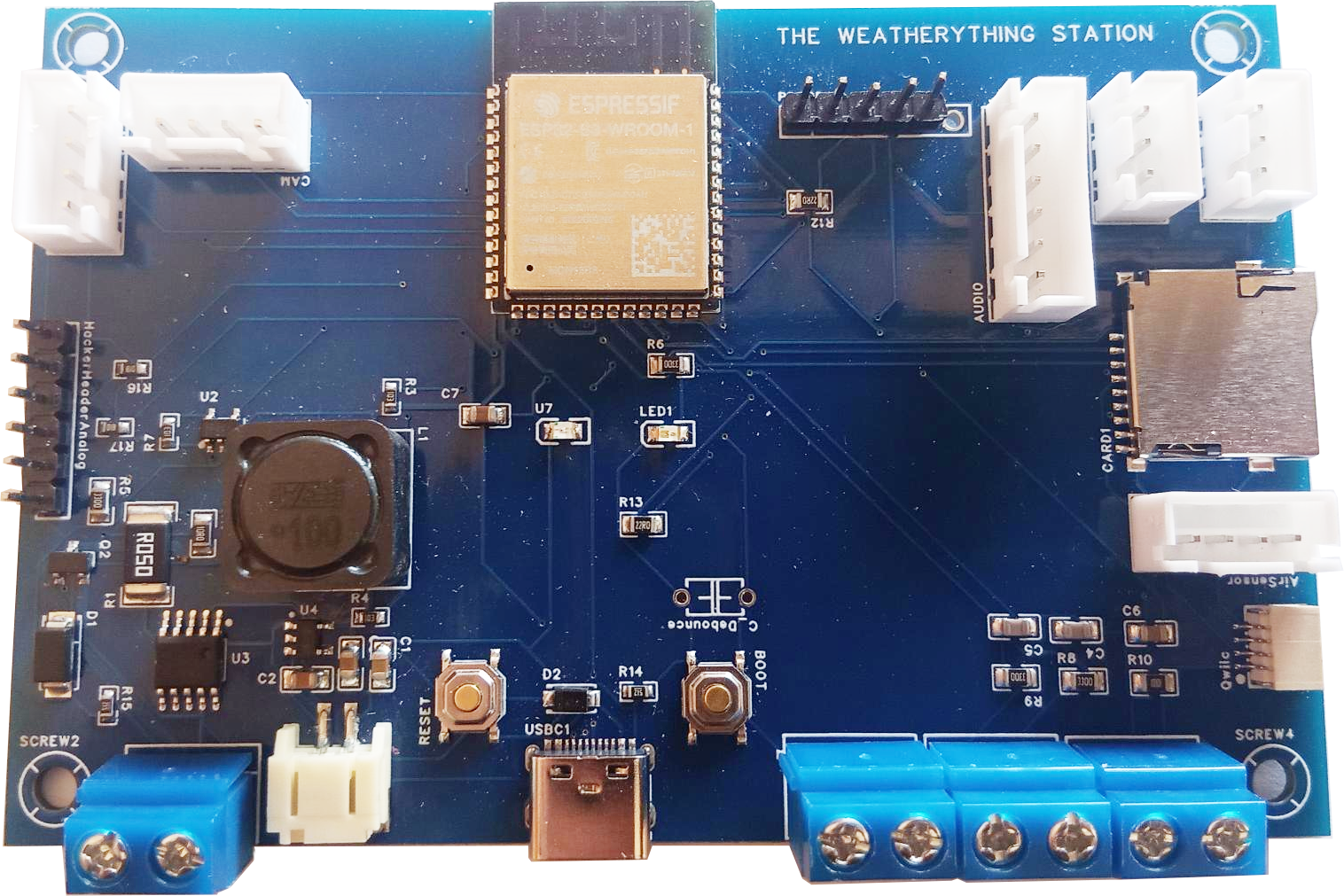
Engineered to be an open-architecture sensor hub, the station integrates visual, auditory, and environmental monitoring into a single low-power unit.
A true plug-and-play architecture. Easily add soil probes, atmospheric modules, or custom sensors to fit your specific environmental research needs.
Equipped with an integrated camera and microphone module. Users can tune in securely to view low-latency live streams and listen to the ambient sounds of nature.
By passing the live audio feed through advanced bio-acoustics AI, the station can automatically detect, identify, and log the specific species of birds visiting your area.
Because of its compact size, live-streaming capability, and AI bio-acoustics, the system is perfectly designed to be seamlessly mounted inside a backyard bird feeder or birdhouse.
Weatherything isn't just a piece of hardware; it is a decentralized, community-driven network. Anyone can access our central hub at weatherythingstation.com, click on the Global Map, and tune in to live public stations around the world to see other users' data, watch their live cameras, or listen to the ambient wildlife.
Want to see it in action? Visit our dedicated website for full specifications. To access our live command center, simply click on the Global Map, select our active Nova Scotia station icon, and click View Dashboard.
Whether you are an investor, an embedded systems developer wanting to contribute to the open-source code, or a user who wants to beta test Version 2, we'd love to partner with you.
Reach Out to the Lab